
A recent study was published in the journal Diabetes Care that exposed the link between ultra-processed food consumption and the risk of getting type 2 diabetes. The study pooled together results from three large U.S. cohorts: the Nurses’ Health Study, Nurses’ Health Study II, and the Health Professionals Follow-Up Study.
The Study’s Main Result: UPF bad
Harvard University has been following these cohorts for many years now. The study included over 5 million person-years of follow-up, and it showed overall that higher total intake of ultra-processed food (UPFs) was associated with a 46% increased risk of type 2 diabetes when they compared the highest to lowest consumption groups. This is high-quality evidence supporting the link between UPF and type 2 diabetes.
This result is not surprising, to me, to you, or to anyone else who gave it a couple seconds of thought. How do you build good health out of food that has had the essential nutrients taken out of it that make it spoil faster, look darker, or less appealing to the public. They add more salt, fat, sugar to cover up the fact that the results of their processing isn’t very tasty. So, we can all together agree that health is not a priority for the food giants that make the majority of the UPF in this country. And we give in to our tastes for fat, sugar, and salt and give them our money, so it isn’t surprising that they make more of the same junk to feed us.
UPFs are bad. We know that. When we stop buying it, they will stop making it.
But there’s more details in the sub-analysis. This is what’s really interesting here.
Not All Ultra-Processed Food is the Same
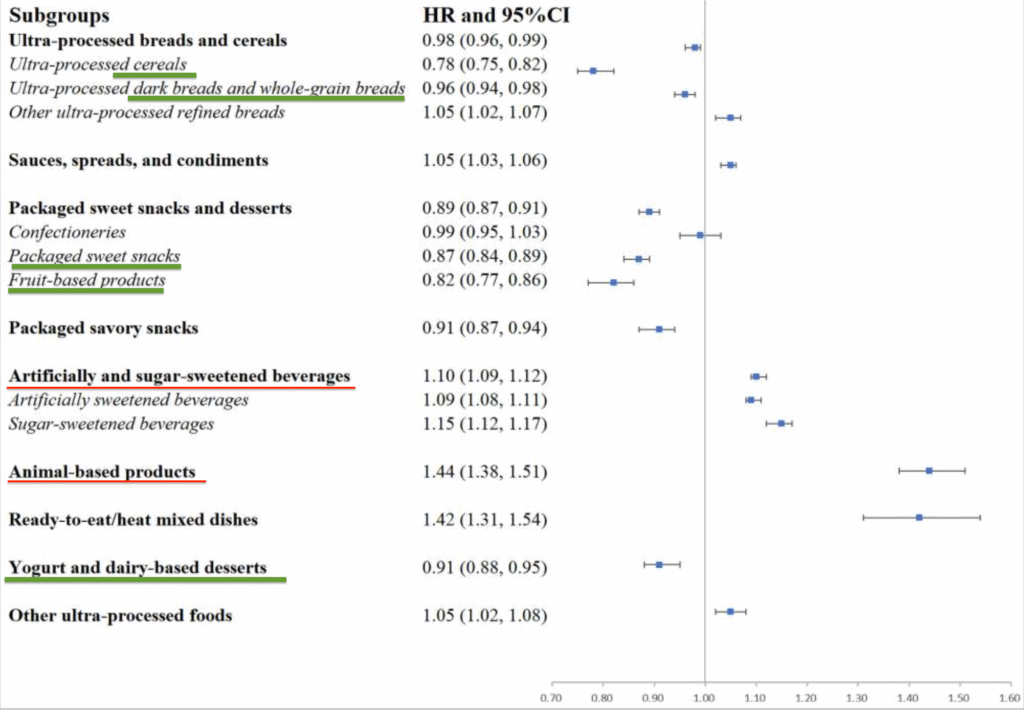
When the researchers dug into the different kinds of UPFs, they found some critical distinctions: Refined breads, sauces, spreads, condiments, artificially and sugar-sweetened beverages, as well as animal-based products and ready-to-eat mixed dishes (maybe like pasta dishes, lasagna, processed meat and refined grain dinners, TV dinners, etc.,) all contributed to higher T2D risk. This is what we would expect, but there’s more.
Ultra-processed cereals, dark and whole grain breads, packaged and savory snacks, fruit-based products, and yogurt and dairy-based desserts were associated with a lower T2D risk.
These foods have more fiber in them, more minerals, maybe some more beneficial dairy fats, some of the odd-chain fats like C15. These may give some protective effects.
The key finding here is that even in the ultra-processed food category, what you choose to eat does make a difference. When you need a snack or something that’s ready to eat, choose whole grain cereals, whole grain breads, fruit-based snacks, yogurt, even nuts and seeds that didn’t get on the list, but those would be a good snack as well.
In the Figure below, from the Diabetes Care article, the categories underlined in green gave positive results, while the categories underlined red (my editing, of course) increased the risk of T2D.
Daily Choices Become Habit, Habit Becomes Lifestyle, Lifestyle Leads to Destiny
Avoid sugar-sweetened drinks and processed meats to lower your risk of type 2 diabetes. We can all make these decisions.
- Apples instead of apple pie.
- Oranges instead of orange juice.
- Nuts and seeds or trail mix instead of candy bars or meat snacks.
- Pure water or even flavored water instead of soda pop.
- Whole grain breads instead of refined white bread.
- Raisins, prunes, and dried apricots instead of candy.
These are all easy choices and readily available to many people. Once you get into the habit of making good food choices they will stick with you and become automatic. Cravings die down, your body is fed with real food, and your health improves.
“Let your food be your medicine and your medicine your food.”
Reference: Chen Z, et al. Ultra-Processed Food Consumption and Risk of Type 2 Diabetes: Three Large Prospective U.S. Cohort Studies. Diabetes Care. 2023;46(7):1335–1344. https://pmc.ncbi.nlm.nih.gov/articles/PMC10300524/
