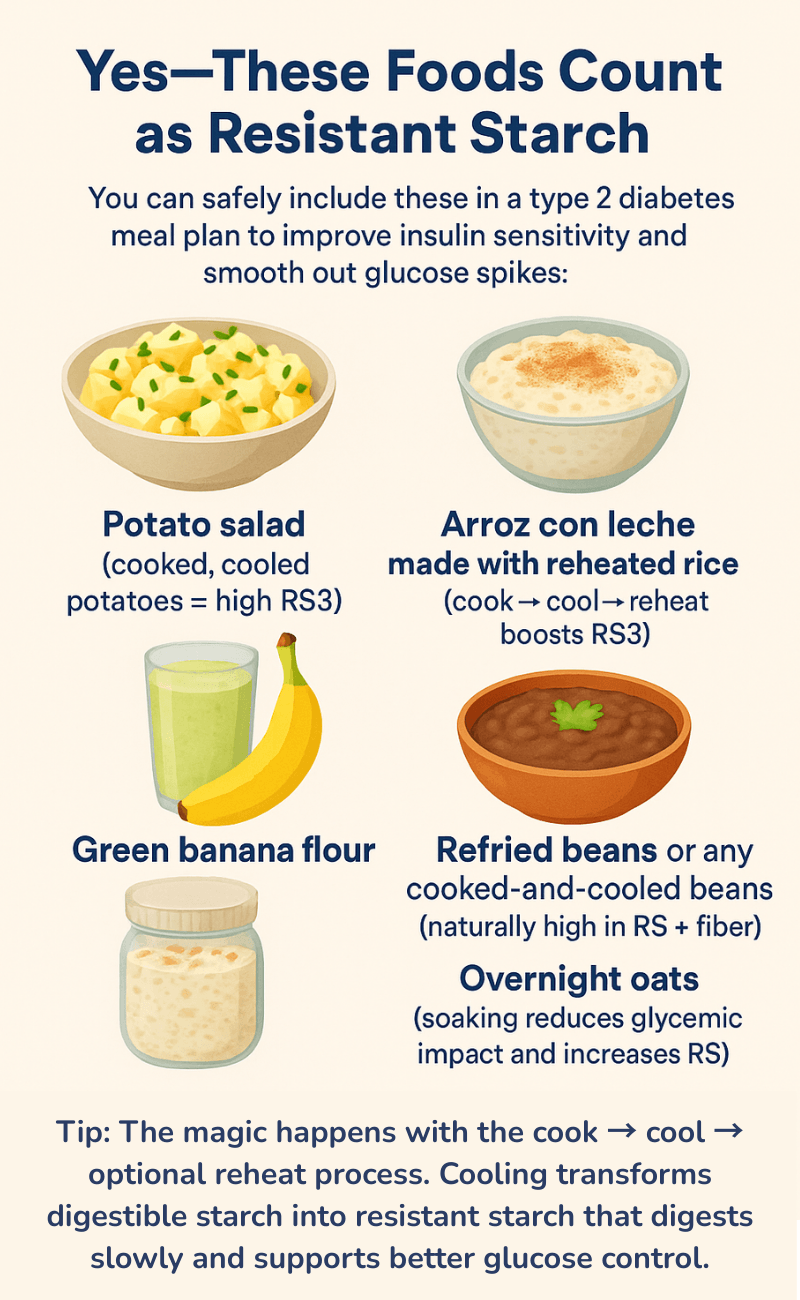
Many people think that carbohydrates are a serious problem for diabetics and for controlling blood sugar. But not all carbs act the same way on your body. Resistant starch is a friendly carb to you. And there are easy, super-simple ways to prepare your food to increase the amount of resistant starch in the foods you already eat. So read on.
What is Resistant Starch?
Resistant starch is a special type of carbohydrate that behaves more like fiber than sugar. They “resist” digestion. Instead of the body breaking it down quickly with the enzymes in our small intestine, it goes on into the colon, where it feeds the beneficial bacteria there.
Two recent research papers help clarify how resistant starch helps people with type 2 diabetes, insulin resistance, and obesity.
Studies Show Benefit of Resistant Starch for Diabetes
A 2019 meta-analysis examined 14 studies on resistant starch in people with diabetes. They found that the benefits were strongest in people who had type 2 diabetes and were also obese. In this group of people, resistant starch significantly lowered fasting blood glucose, fasting insulin, and HOMA-IR, which are three core markers of metabolic health. Resistant starch did not have the same benefits for people who were just obese, but not diabetics.
So the resistant starch had a more noticeable effect when blood sugar regulation was already impaired. It may not be a universal tool for weight loss.
A second study, from 2015, tested a simple question: What happens to blood sugar in real time when you drink a resistant starch beverage? In this study, they used native banana starch, which is isolated from green bananas. That’s a real thing, and you can buy bags of this green banana powder or green banana starch on Amazon. Who knew?
Anyway, back to the study. The participants consumed 38 grams of native banana starch twice daily for 4 days while wearing continuous glucose monitors. Compared with the digestible cornstarch drink, the resistant starch drink significantly improved post-meal glucose and insulin responses to a test meal in both lean and obese subjects. You can see the results in the graphs below. The blue line is the cornstarch, and the pink line is the green banana starch.

Main Takeaway
The main takeaway from this is that resistant starch is a powerful addition for people with type 2 diabetes or with insulin resistance, especially if they’re obese.
Create Resistant Starch from Common Carbs
How do you get this resistant starch? You can increase the resistant starch in several common foods simply by heating, then cooling, and reheating them a bit. The cooling process increases the amount of resistant starch, and reheating it still retains most of it.